
His value lifestyle brand Zudio signals a coming of age of retail in small town India.

India's fuel sales surged past pre-pandemic levels in March on twin impact of the economy rebounding from the lifting of pandemic-related restrictions and anticipation of price increases leading to stocking. In the first two weeks of March, dealers, as well as the public, topped up their tanks in anticipation of an increase in prices that had been on hold in the run-up to the elections in states like Uttar Pradesh. While daily price revisions restarted on March 22, the increases were calibrated.
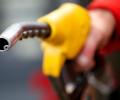
India's petrol and diesel sales fell by about 17 per cent in May from a month ago as restrictions clamped to curb the world's worst outbreak of coronavirus infections stifled demand. Sales of petrol -- used in cars and motorcycles -- fell to 1.79 million tonne in May, the lowest in a year, according to the preliminary data of state-owned fuel retailers. While the consumption was almost 13 per cent higher than demand in May 2020, it was 28 per cent lower than pre-COVID levels of 2.49 million tonne.

'If you align your ambition with India's rise, the peak of your careers will unfold alongside the peak of India's power.'

Wholesale price inflation marginally rose to 2.38 per cent in February due to expensive manufactured food items like vegetables oil and beverages, government data released on Monday showed. The Wholesale Price Index (WPI) based inflation was 2.31 per cent in January. It was 0.2 per cent in February 2024.

Jet fuel prices on Monday were hiked by a steep 5.3 per cent - the tenth straight increase this year -- to an all-time high, in line with a surge in global energy prices. The price of aviation turbine fuel (ATF) -- the fuel that helps aeroplanes fly -- was hiked by Rs 6,188.25 per kilolitre, or 5.29 per cent, to Rs 1,23,039.71 per kl (Rs 123 per litre) in the national capital, according to a price notification of state-owned fuel retailers. This is the 10th straight increase in jet fuel prices this year.
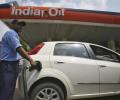
Diesel makes up nearly half of fuel demand in Asia's No 3 economy.

Jet fuel (ATF) prices have been hiked by a steep 6.9 per cent, taking the rates to lifetime high of Rs 75,031 per kilolitre.

The combined market valuation of the top-ten most valued firms jumped by a whopping Rs 3,84,004.73 crore in the holiday-shortened last week, in-tandem with a smart rally in equities, with HDFC Bank and Bharti Airtel emerging as the biggest gainers. Last week, the BSE benchmark Sensex jumped 3,395.94 points or 4.51 per cent, and the NSE Nifty surged 1,023.1 points or 4.48 per cent.

The petroleum ministry has rapped Reliance Industries for failing to meet its obligations of opening and operating 10 per cent of its petrol and diesel retail outlets in remote and low-service areas.
Reliance Industries Ltd, India's most valuable company, is back on a growth path after six months of challenges as it posted better than expected earnings in the December quarter, brokerages said.
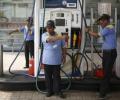
International oil prices have hit a six-month low, helping Indian fuel retailers breakeven on petrol but they continue to lose money on diesel - the most used fuel in the country, officials said. The world's best-known crude benchmark, Brent was trading at $94.91 per barrel on Thursday after concerns of a global recession led to it slipping to a six-month low of $91.51 on the previous day. The current rates are a relief to India, which is 85 per cent dependent on imports for meeting its oil needs.

With rising credit demand, cleaner balance sheets, and renewed investor confidence, banks are positioned at the forefront of the market rally. From major players like ICICI and HDFC to broader policy shifts, there's much driving this momentum.
With rising credit demand, cleaner balance sheets, and renewed investor confidence, banks are positioned at the forefront of the market rally. From major players like ICICI and HDFC to broader policy shifts, there's much driving this momentum.
With rising credit demand, cleaner balance sheets, and renewed investor confidence, banks are positioned at the forefront of the market rally. From major players like ICICI and HDFC to broader policy shifts, there's much driving this momentum.

In the first reduction in rate in two months, jet fuel or ATF price on Thursday was cut by 3 per cent in line with softening international crude oil prices. Aviation turbine fuel (ATF) price was reduced by Rs 1,887 per kilolitre, or 3 per cent, to Rs 58,374.16 per kl in the national capital, according to a price notification of state-owned fuel retailers. This is the first reduction in rates after four rounds of increase since February. Rates were increased by Rs 3,246.75 per kl on February 1, followed by a 3.6 per cent hike on February 16, and a steep 6.5 per cent raise on March 1. On March 16, prices were again raised by Rs 860.25 per kl. On Thursday, a Rs 10 per cylinder reduction in price of domestic cooking gas LPG also came into effect.

The hike comes on back of two massive hikes effected on February 1 and 16.

Ola Electric has eliminated its regional warehouses across India, and will now leverage its 4,000 retail stores nationwide for maintaining vehicle inventory, spare parts, accessories, and last-mile deliveries. The strategic move is expected to boost EBITDA margins by almost 10 percentage points, besides improving inventory management and faster customer deliveries, sources directly familiar with the matter said.

So far this year, bankers have earned Rs 1,226 crore for handling 45 IPOs, which together mobilised Rs 48,363 crore.
State-owned fuel retailers are losing close to Rs 3 per litre on selling diesel while the profit on petrol has trimmed due to recent firming up in international oil prices, industry officials said detailing reasons for continuing to hold retail prices. Indian Oil Corporation (IOC), Bharat Petroleum Corporation Ltd (BPCL) and Hindustan Petroleum Corporation Ltd (HPCL), who control roughly 90 per cent of India's fuel market, 'voluntarily' have not changed petrol, diesel and cooking gas (LPG) prices for almost two years now, resulting in losses when input cost was higher and profits when raw material prices were lower.
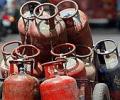
To help them make up for the revenue lost on selling auto and cooking fuel below cost.
The wholesale price-based inflation accelerated to a record high of 12.94 per cent in May, on rising prices of crude oil and manufactured goods. Low base effect also contributed to the spike in WPI inflation in May 2021. In May 2020, WPI inflation was at (-) 3.37 per cent. This is the fifth straight month of uptick seen in the wholesale price index (WPI)-based inflation. In April, 2021, WPI inflation hit double digit at 10.49 per cent. "The annual rate of inflation, based on monthly WPI, was 12.94 per cent for the month of May, 2021 (over May, 2020) as compared to (-) 3.37 per cent in May 2020.
Reliance Industries Ltd, India's biggest firm by market capitalisation, is drawing up plans to convert its fuel retail outlets, which were recently closed owing to unviable operations, into malls and multiplexes.

IOC, in the annual performance memorandum it signs with the petroleum ministry, stated that the Navratna oil companies should be granted freedom to fix retail selling price of petrol, diesel, domestic LPG and kerosene.

State-owned oil firms on Friday hiked jet fuel prices by almost 2 per cent, the sixth straight increase in rates since October when international crude oil prices started climbing.

India's fuel sales fell in the first half of April as a record rise in prices in a short 16-day period dented demand, preliminary industry data showed on Saturday. Petrol sales fell almost 10 per cent in the first half of April when compared with the same period in the preceding month, while diesel demand slid 15.6 per cent. Even cooking gas LPG, which had consistently shown growth even during the pandemic period, saw a 1.7 per cent month-on-month fall in consumption during April 1-15.
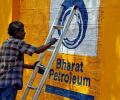
After HPCL, the government headhunter struggled to find a suitable candidate for the top job at Bharat Petroleum, as most applicants were narrow specialists lacking multidisciplinary experience needed to run a large organisation. The Public Enterprise Selection Board (PESB) last month interviewed a dozen candidates including BPCL director (finance) Vetsa Ramakrishna Gupta and its director (refineries) S Khanna but found none suitable for the job of chairman and managing director of Bharat Petroleum Corporation Ltd (BPCL), according to a PESB order.

Retail inflation eased to a nearly six-year low of 3.16 per cent in April mainly due to subdued prices of vegetables, fruits, pulses, and other protein-rich items, creating enough room for the Reserve Bank to go for another round of rate cut in the June monetary policy review. The Consumer Price Index (CPI) based inflation was 3.34 per cent in March and 4.83 per cent in April 2024. It was 3.15 per cent in July 2019.

The country's biggest fuel retailer Indian Oil Corporation on Wednesday said it is losing Rs 107 crore (Rs 1.07 billion) a day on selling auto and cooking fuel below cost even as it awaits the government to announce clear compensation package.
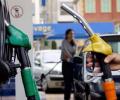
This is the second straight increase in ATF price this month. Rates were hiked by a record 56.5 per cent (Rs 12,126.75 per kl) on June 1. Simultaneously, petrol and diesel prices were hiked for the 10th day in a row.

Wholesale price inflation rose to 2.37 per cent in December 2024, led by spike in manufactured products even though prices of food items eased, government data released on Tuesday showed.

Mukesh Ambani's Reliance Industries is slugging it out with fuel retailers in Gujarat.
For the first time in seven months, state-run fuel retailers are making losses on selling diesel and together with negative returns on petrol, LPG and kerosene, the companies may lose Rs 38,700 crore (Rs 387 billion) in revenues this year.
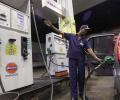
The demand, which had fallen by as much as 70 per cent, has since recovered after lockdown restrictions were eased beginning early May.
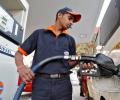
Global oil prices have slumped and India has access to larger amounts of discounted Russian crude oil, yet refiners are not passing on their savings to consumers
Petrol and diesel prices were hiked by 80 paise a litre each on Wednesday, taking the total increase in rates in 16 days to Rs 10 per litre.
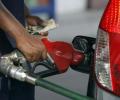
Petrol and diesel prices, which have been on a freeze for the past four months in view of assembly elections in states like Uttar Pradesh, need to be increased by over Rs 12 per litre by March 16 for fuel retailers to break even. International crude oil prices shot above $120 a barrel for the first time in nine years on Thursday before retreating a little to $111 on Friday, but the gulf between cost and retail rates has only widened. With international oil prices - on which domestic fuel retails are directly benchmarked - spiking in the last two months, state-owned fuel retailers "need a massive price hike of Rs 12.1 per litre on or before March 16, 2022, just to breakeven and a price hike of Rs 15.1 is required" after including margins for oil firms, ICICI Securities said in a report.

Retail inflation declined to 6.83 per cent in August after touching a 15-month high of 7.44 per cent in July, mainly due to softening prices of vegetables, but still remains above the Reserve Bank's comfort zone. The overall inflation in the food basket stood at 9.94 per cent in August as against 11.51 per cent in July, according to data released by the National Statistical Office (NSO) on Tuesday. Retail inflation based on the Consumer Price Index (CPI) was at 7 per cent in August 2022.

Retail inflation dipped marginally to 6.44 per cent in February, mainly on account of a slight easing in prices of food and fuel items though it remained above the Reserve Bank's comfort level of 6 per cent for the second month in a row. As per the government data released on Monday, the Consumer Price Index (CPI)-based inflation was at 6.52 per cent in January and 6.07 per cent in February 2022. The retail inflation rate for the food basket worked out to be 5.95 per cent in February, marginally lower than 6 per cent in January.
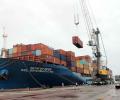
Industry associations and companies in the United States, including the US Chamber of Commerce, Coalition of Services Industries and the iconic bike company Harley Davidson have called on the Donald Trump dispensation to push India to reduce tariffs, non-tariffs, and regulatory barriers to boost American exports.
